
Assessment-based massage therapy for jaw pain, clenching or grinding, restricted opening, and related neck tension or headaches.
The temporomandibular joints (TMJs) connect the lower jaw to the skull, one on each side. Temporomandibular disorders (TMDs) can affect the jaw joints, chewing muscles and jaw movement. Jaw symptoms may also occur with facial pain, headaches or neck symptoms.
The neck and shoulders may be assessed when relevant to your symptoms and assessment findings. Treatment may include external techniques to the jaw and face and, when relevant, the neck and shoulders.
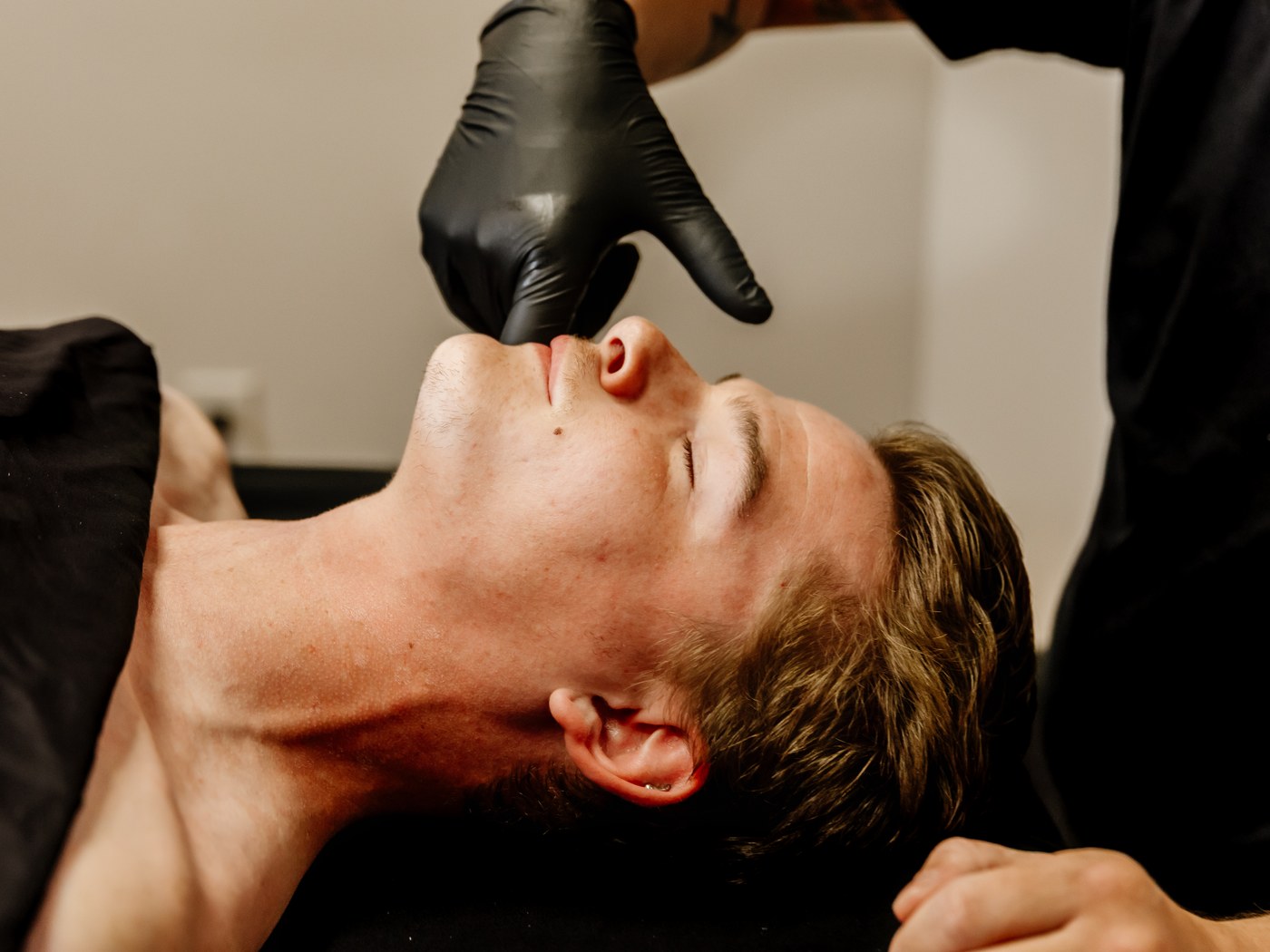
Intraoral techniques inside the mouth may also be considered when indicated by the assessment and treatment plan. Specific consent will be obtained before intraoral treatment, and you may decline or stop the technique at any time.
When indicated by the assessment and treatment plan, techniques inside the mouth may be considered. A protective glove covering the full hand will be worn. Before treatment begins, a non-verbal stop signal will be agreed upon, and communication about your comfort will continue throughout the technique.
Specific consent will be obtained, and you may decline, modify or stop intraoral treatment at any time. Choosing not to include intraoral work does not limit the rest of your treatment.
Referral will be recommended when assessment indicates that another healthcare provider should be involved or the concern falls outside massage therapy practice.
Following assessment, TMJ-focused techniques may be included within registered massage therapy for the concerns below. Other techniques may be considered for separate or related findings when appropriate and with your consent.
Your symptoms, relevant health history, dental or medical care, and treatment goals will be reviewed, along with how your jaw moves. Mathieu will explain the options being considered and what each involves before obtaining your consent.
Hands-on work to the jaw, face, neck and shoulders. Pressure and depth are adjusted to your comfort and response throughout.
If intraoral techniques are appropriate, they are discussed and consented to separately. A protective glove covering the full hand is used, and a non-verbal stop signal is agreed before starting so you can stop at any point without speaking.
Jaw movement and comfort may be rechecked afterward. Your response helps determine whether this approach is continued, modified, or left out of future treatment. Referral will be recommended when assessment indicates that another healthcare provider should be involved or the concern falls outside massage therapy practice.
You do not need to select a TMJ appointment when booking. New clients should choose Initial Assessment + Treatment. Returning clients can choose the appropriate follow-up treatment length. TMJ-focused treatment may be included following assessment and with your consent.
Book Appointment