RAPID NeuroFascial Reset is an active, hands-on technique that combines therapist-applied pressure with guided movement. It may be included within registered massage therapy to address pain, sensitivity, or restricted movement, based on your assessment, goals, comfort, and response to treatment.
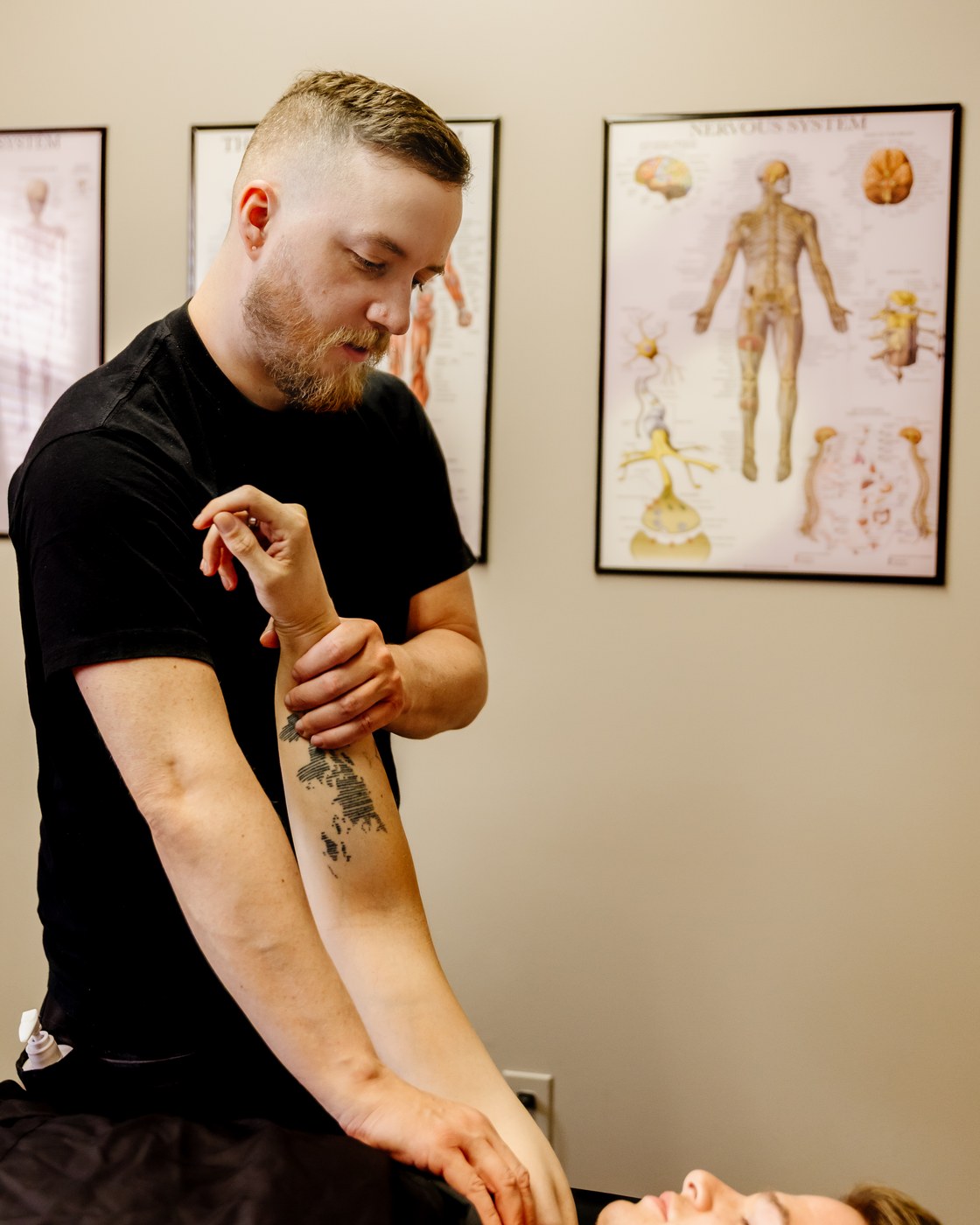
RAPID combines therapist-applied pressure with guided movement or muscle activation. Unlike a fully passive treatment, you remain involved during the technique.
The approach is informed by the nervous system's role in pain sensitivity and movement. It does not rely on the idea of mechanically breaking up scar tissue or adhesions. Pressure, movement, and treatment intensity are adjusted based on your comfort and response.
RAPID may form part of your massage therapy treatment and may be combined with therapeutic massage, IASTM, or cupping when appropriate. The proposed approach will be explained before treatment, and RAPID will only be used with your consent.
Following an assessment, RAPID may be considered for persistent pain, muscle tension, sensitivity, or movement restriction. It is not appropriate for every concern, and another treatment approach or referral may be recommended.
We'll discuss your concern, relevant health history, previous care, and treatment goals. A focused physical and movement assessment helps establish a baseline and determine if RAPID is appropriate. Initial visits generally require more assessment time than follow-up appointments.
If RAPID is appropriate, Mathieu will explain the proposed approach before proceeding. You may be asked to perform small movements or muscle contractions while pressure is applied to selected areas. Pressure and movement are adjusted to your comfort, and you may ask to modify or stop the technique at any time. It is an active process that works with you rather than a fully passive treatment.
We'll recheck relevant movements, symptoms, and comfort during or after treatment to compare your response with the initial assessment. These findings help guide any adjustments to the treatment plan and future care. Responses vary between clients, and no specific result can be guaranteed.
You may receive one or two simple movement or self-care recommendations suited to your goals. These recommendations are optional and can be changed if they increase your symptoms or do not feel appropriate.
Mathieu has completed RAPID NeuroFascial Reset training in upper body, lower body, and core applications.
Book an Initial Assessment + Treatment if this is your first visit. RAPID may be included when appropriate, following assessment and with your consent. Returning clients can choose a follow-up treatment based on the time needed.
Book Appointment