
Cupping uses controlled suction applied to the skin. It may be included within a massage therapy treatment to provide a different form of mechanical and sensory input, particularly when direct pressure is uncomfortable or another approach may be helpful.
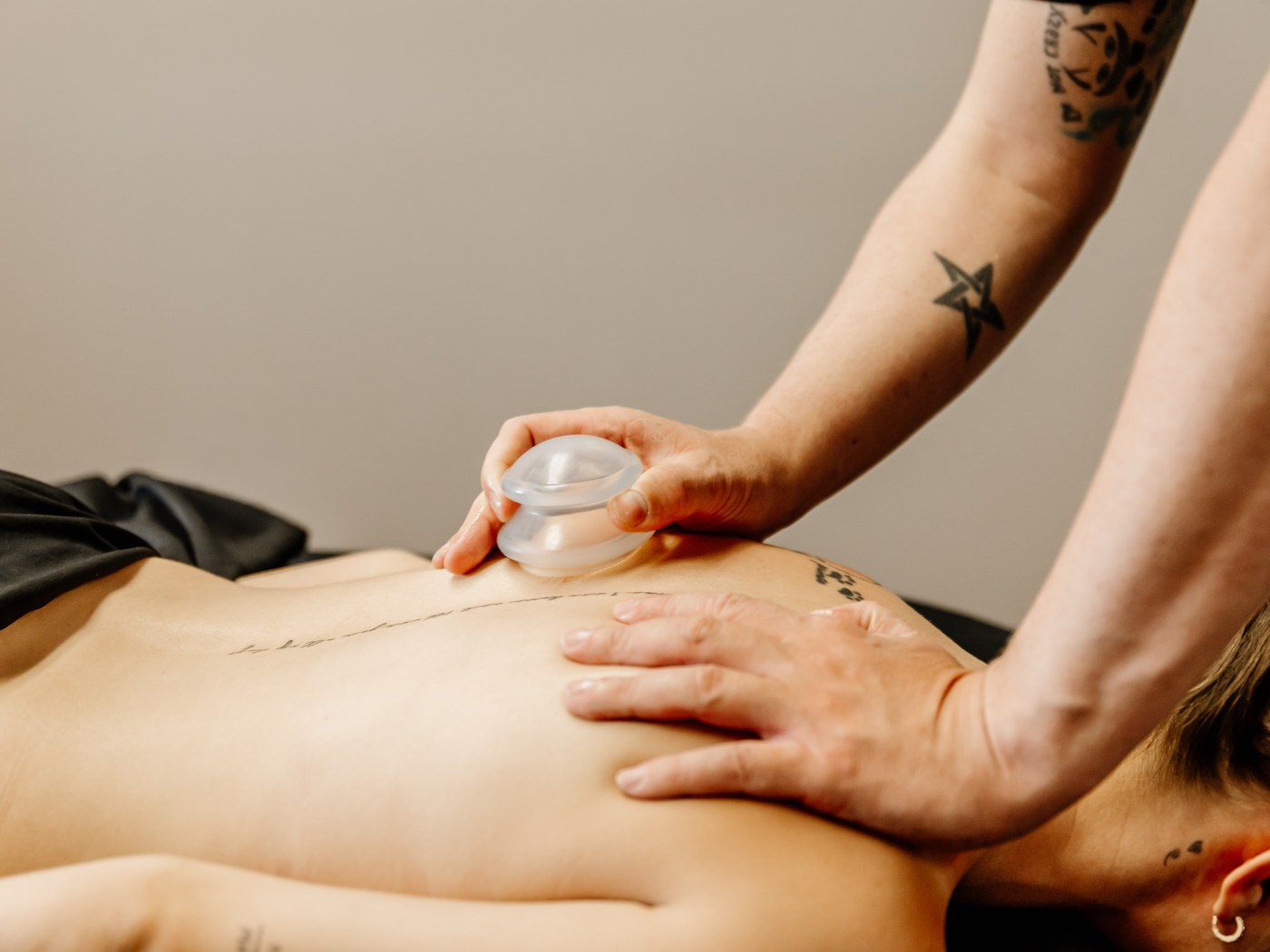
Cupping uses cups placed on the skin to create controlled negative pressure. The cups may remain in one position or move across the skin with lotion, depending on the area and treatment goal.
The sensation feels different from traditional hands-on pressure. It is usually experienced as pulling or lifting at the skin rather than downward compression.
Cupping is generally used as one part of a broader massage therapy treatment rather than a separate treatment on its own. The amount of suction, placement, and duration are adjusted to your comfort, response, and consent.
Temporary redness, tenderness, or circular discoloration may occur afterward. The intensity and duration vary between clients.
Following assessment, cupping may be considered for muscle tension, stiffness, movement-related discomfort, or areas that are sensitive to direct pressure. It may be combined with massage therapy, RAPID, or IASTM when appropriate and with your consent.
Your health history, symptoms, medications, skin condition, and treatment goals will be reviewed. Mathieu will explain why cupping is being considered, what it may feel like, and the possible skin response before obtaining your consent.
Cups are applied to the skin using controlled suction. They may remain stationary or move across the area with lotion. Suction and placement are adjusted to your comfort, and you may ask to reduce or stop the technique at any time.
Relevant movement, discomfort, or other assessment findings may be rechecked after treatment. Your response helps determine if cupping should be continued, modified, or left out of future treatment.
Temporary redness, tenderness, or circular bruise-like marks may occur. Marks can range from light pink to darker red or purple and usually fade over several days, although this varies between clients. Let Mathieu know if you experience blistering, significant pain, skin irritation, or another unexpected reaction.
You do not need to select cupping when booking. New clients should choose Initial Assessment + Treatment. Returning clients can choose the appropriate follow-up treatment length. Cupping may be included following assessment and with your consent.
Book Appointment