
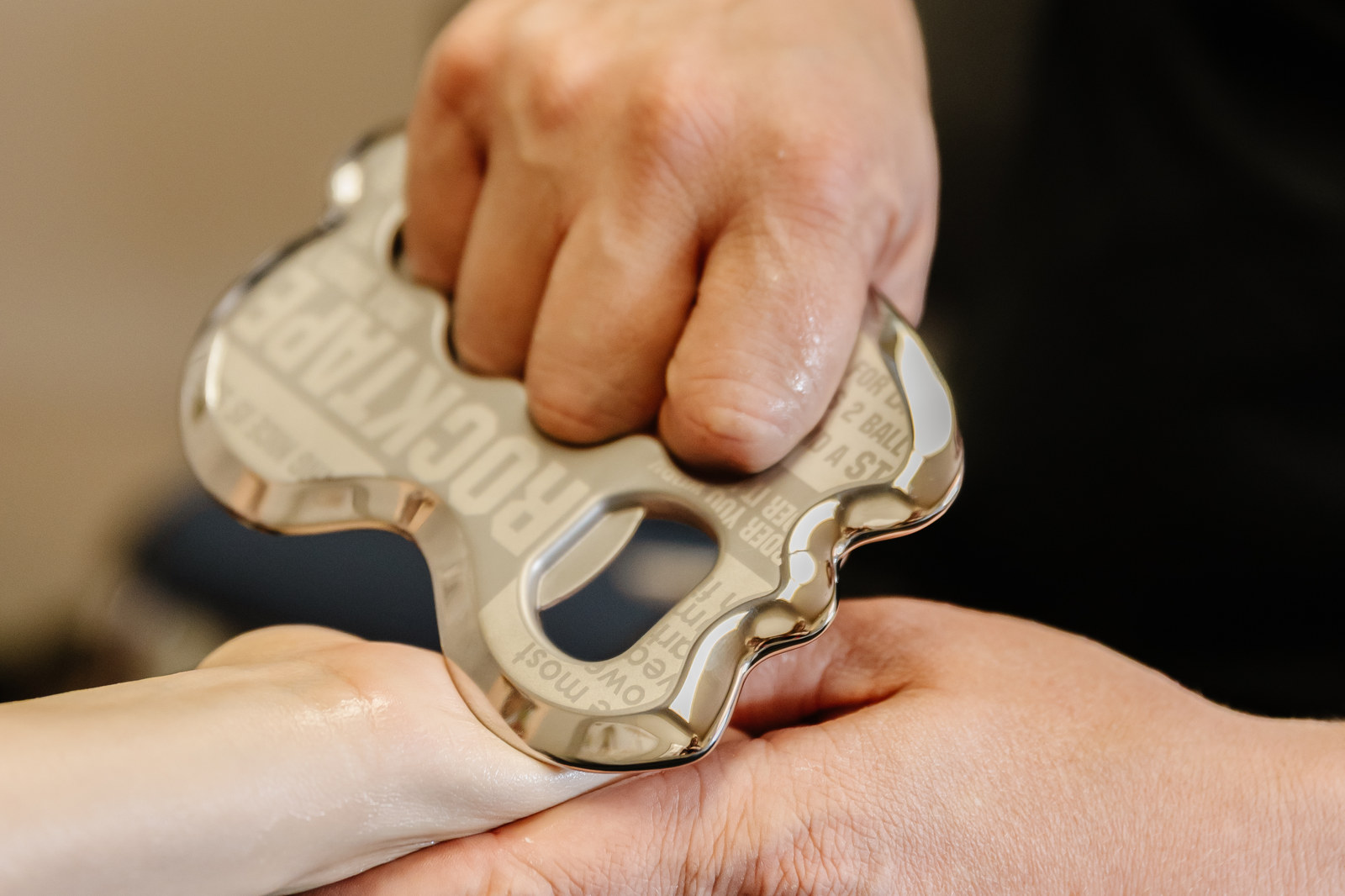
Those shiny metal tools may look intense, but IASTM is not about scraping as hard as possible or leaving behind bruises.
It is a versatile hands-on technique that can be gentle, focused, calming, or movement-based depending on what your body needs.
IASTM stands for instrument-assisted soft tissue mobilization. It uses a smooth tool, commonly made from stainless steel, to apply controlled pressure to muscles, fascia, and other soft tissues.
I use IASTM as part of a massage therapy treatment when an area feels tight, sensitive, guarded, or restricted during movement.
The tool does not replace my hands. It gives me another way to make treatment more precise and adapt it to the area being treated.
Fascia is a continuous network of connective tissue that surrounds and supports muscles and other structures throughout the body.
Healthy movement involves different layers of skin, fascia, muscles, and connective tissue working together. When an area becomes irritated, guarded, or less comfortable to move, you may experience that familiar feeling of being tight or “stuck.”
IASTM provides focused sensory input to the area while allowing me to adjust the treatment based on how the tissue feels and how your movement responds.
The goal is simple: help you feel less restricted and move more comfortably.
One of the biggest misconceptions about IASTM is that it always involves hard scraping.
It does not.
Different parts of the tool can be used with different speeds, angles, directions, and amounts of pressure. Depending on the treatment goal, I may use:
Some areas respond best to light contact. Others may benefit from moderate, focused pressure. More pressure does not automatically mean a better result.
IASTM may be a useful addition to treatment when you are experiencing:
It can be used around areas such as the shoulders, forearms, hips, thighs, calves, and feet when appropriate.
The result I am looking for is not redness or bruising. I am looking for a meaningful improvement in comfort, movement, or how the area feels.
I usually apply a small amount of lotion so the tool can glide comfortably across your skin.
You may feel a light brushing sensation, moderate pressure, warmth, or a more focused sensation over a tight area. The experience can change depending on the tool edge and technique being used.
You should always be able to communicate with me. Sharp pain is not the goal, and you do not need to “tough it out” for the treatment to be useful.
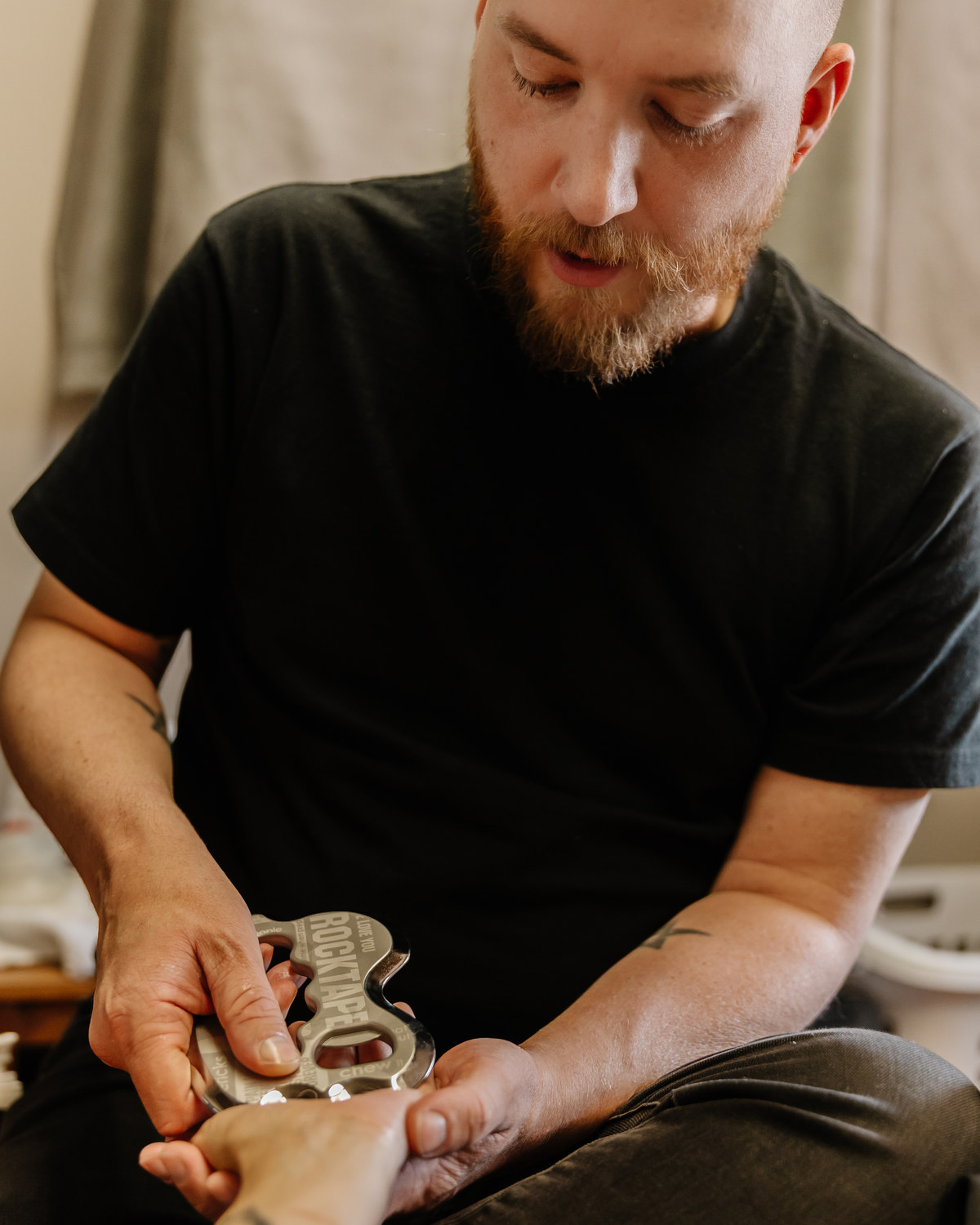
Every treatment begins with a health-history review and assessment.
I look at what is bothering you, how the area moves, and what may be contributing to the problem. If IASTM is appropriate, I explain the approach and ask for your consent before using it.
After treating the area, I may check the movement again. This helps me decide if I should continue, adjust the technique, or use a different approach.
IASTM may be combined with:
This combination helps connect the hands-on treatment with the movements you want to perform more comfortably.
IASTM is not necessary for every person or every appointment. I may change or skip it when there is broken or irritated skin, an active infection, unexplained swelling, reduced sensation, a recent procedure, or a concern about bleeding or bruising.
Your comfort and consent always come first. You can ask me to change the pressure, switch techniques, or stop at any time.
If an area continually feels tight, guarded, or difficult to move, IASTM may be a helpful addition to your massage therapy treatment.
Book your appointment online to find out if it fits your treatment plan:
Mathieu Boudreau, RMT
Come in sore, leave moving better.